Robert lived for exactly this. Every field he took the hammer to, from Summerhall to Pyke.
Robert's Rebellion
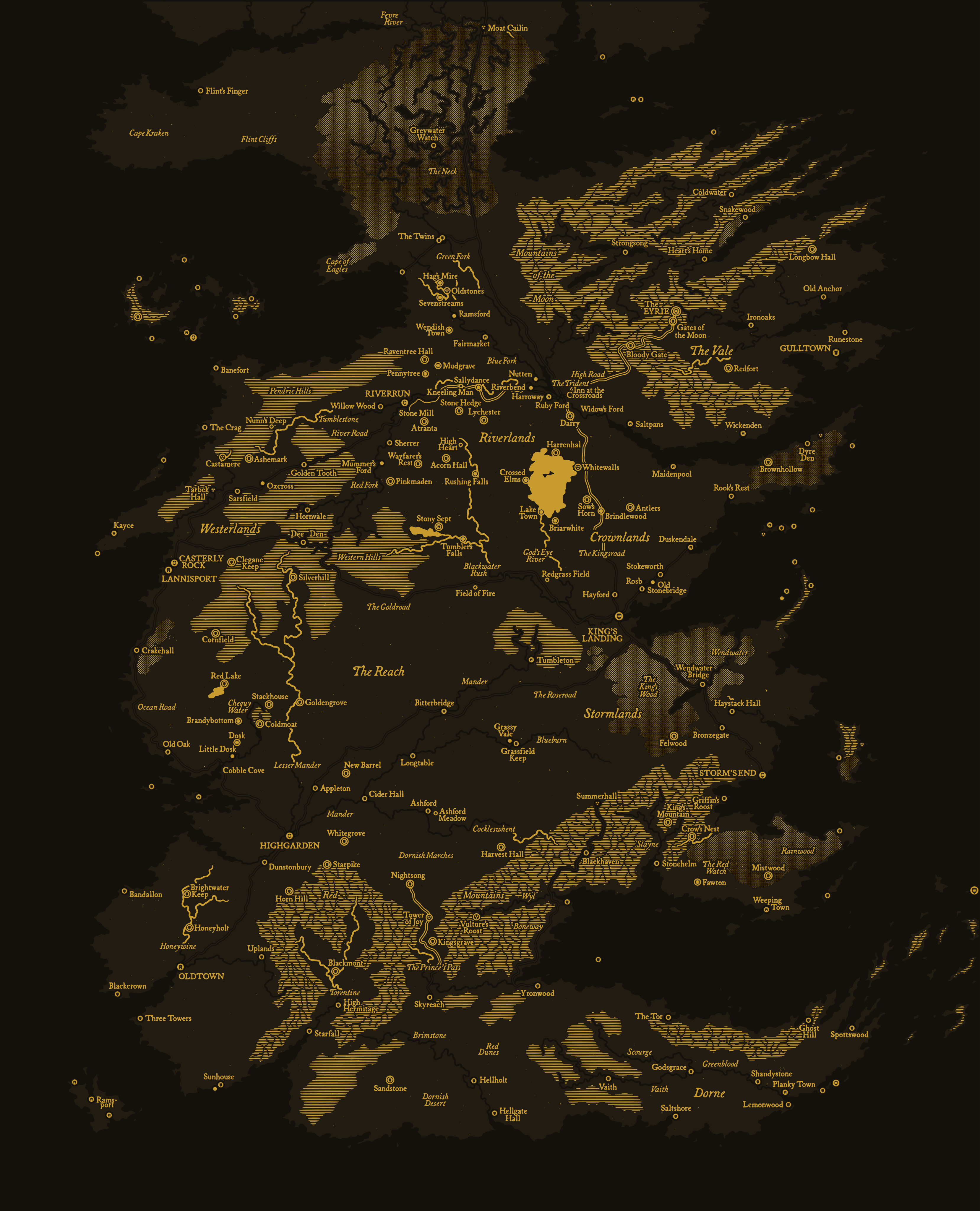
The rebellion lasted close to a year and was decided almost entirely by battles Robert fought in person. His genius was not the patient strategy of a Tywin Lannister; it was speed, audacity, and the sheer terror of the man himself in the front rank. Where Robert's hammer fell, lines broke.
The rebellion, in the order he fought it. Pyke came nine years later, and by then he was the king he had beaten.
Opening moves · The Stormlands
The Battles of Summerhall
Victory ×3 — in one day
Racing home from the Vale to raise his banners, Robert learned that three of his own stormlord vassals — Grandison, Cafferen, and Fell — were marshaling for the king and planned to unite against him. He refused to let them. Marching hard, Robert fell upon each host separately at the ruined palace of Summerhall and broke all three in a single day, slaying Lord Fell in single combat and then, in perfect Robert fashion, taking Fell's famous son Silveraxe captive and eventually winning him over. The legend of the rebellion was born here: strike first, strike fast, and turn yesterday's enemies into tomorrow's drinking companions.
As Robert told it
Three of them, in one day. Grandison, Cafferen, and old Fell, all sharpening knives for Aerys and too stupid to do it together. So I saw to them one at a time before they could shake hands on it. Killed Fell myself — good swing, that one. Then I looked at his boy Silveraxe, all fury and no sense, and thought: I know that face. Gave him a horn of ale instead of a grave. Best recruiting I ever did. That's the whole trick of war nobody writes down — hit the bastards before they're ready, and buy the survivors a drink.
The Reach intervenes · Ashford
The Battle of Ashford
Defeat
Pressing south-west, Robert's stormlanders collided with the vanguard of Lord Mace Tyrell's much larger Reach army at Ashford. The battle was brief and went against him — the only defeat of Robert's career, and one for which Lord Randyll Tarly's van deserves the real credit, though Mace Tyrell dined out on it for the rest of his life. Robert, wounded, extracted his forces and retreated north to join his allies, leaving Storm's End to withstand a year-long siege under his brother Stannis.
As Robert told it
Ah. Yes. That one. We don't sing about Ashford. Tarly caught my van before I'd got my feet under me and gave me the only beating of my life, and Mace Tyrell — who I'd wager never swung a sword the whole day — told the story at every feast for fifteen years like he'd done it himself. I took a wound and I took my leave, and I left Stannis to sit in Storm's End and starve for a year. He's never quite forgiven me that. Can't say I blame him. A man remembers his defeats sharper than his wins. Only had the one, mind.
The turning point · The Riverlands
The Battle of the Bells
Victory
Cut off from his allies and hunted by the royal Hand, Lord Jon Connington, a wounded Robert went to ground in the town of Stoney Sept — hidden, tradition insists, in a brothel. Connington searched the town house by house as the sept's bells rang warning, but before he could flush his quarry, the armies of Eddard Stark and Hoster Tully fell upon the town. Robert erupted from hiding straight into the thick of the fight, nearly reaching Connington himself. The royalists broke; Connington was exiled for the failure; and the rebellion, which had been a day from decapitation, never faced serious pursuit again. Aerys, finally understanding the danger, sent Prince Rhaegar to take command.
As Robert told it
Half the songs say I was hiding in a brothel at Stoney Sept, and I'll not insult you by denying it — a man on the run takes the bed that's offered. Connington went house to house looking for me while the bells screamed the town awake, and just as he was closing in, Ned and old Hoster Tully came down on him like the wrath of the gods. I came out of that door swinging and near had Connington's head before his line broke. They sent him into exile for losing me. And Aerys, the mad old fool, finally worked out I was worth worrying about — and sent me the one man he had who could actually fight.
The decisive field · The ruby ford
The Battle of the Trident
Victory — war decided
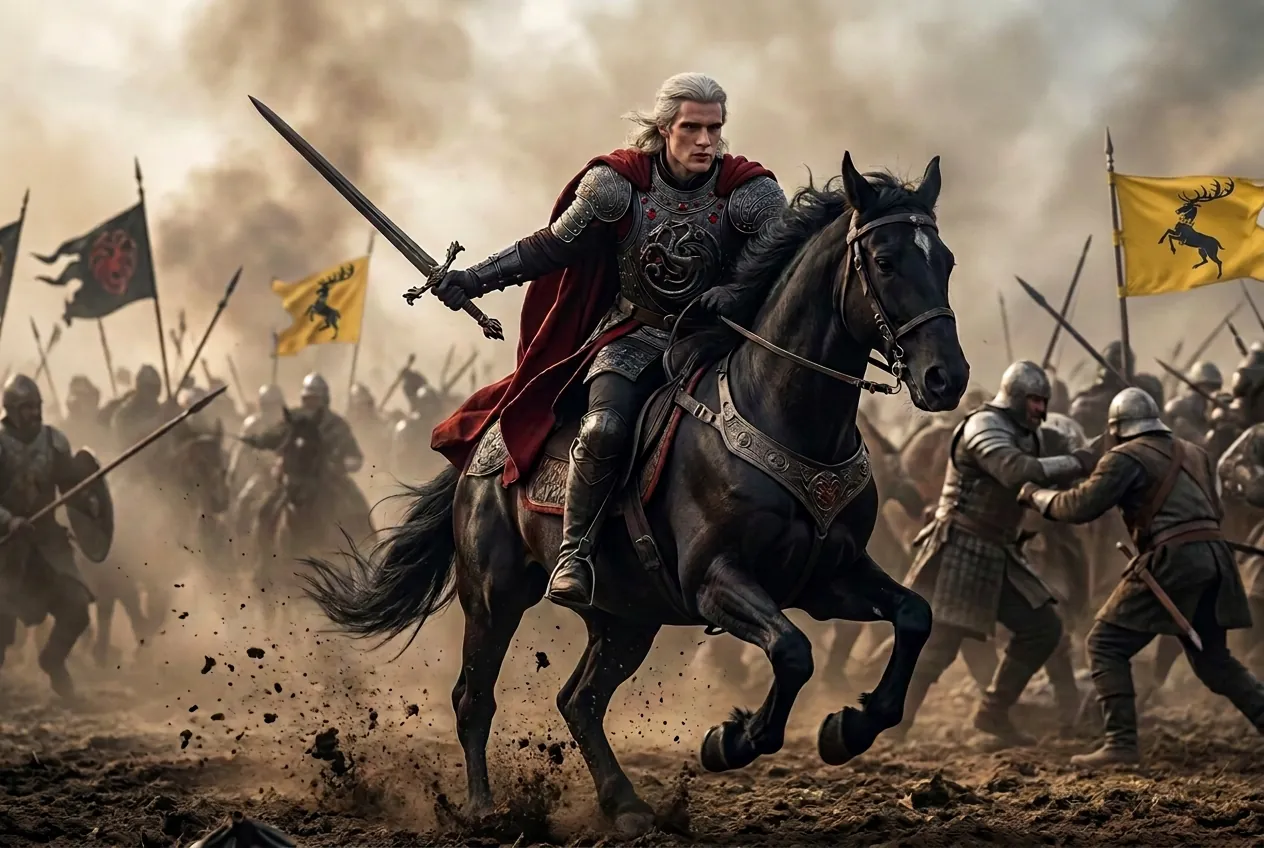
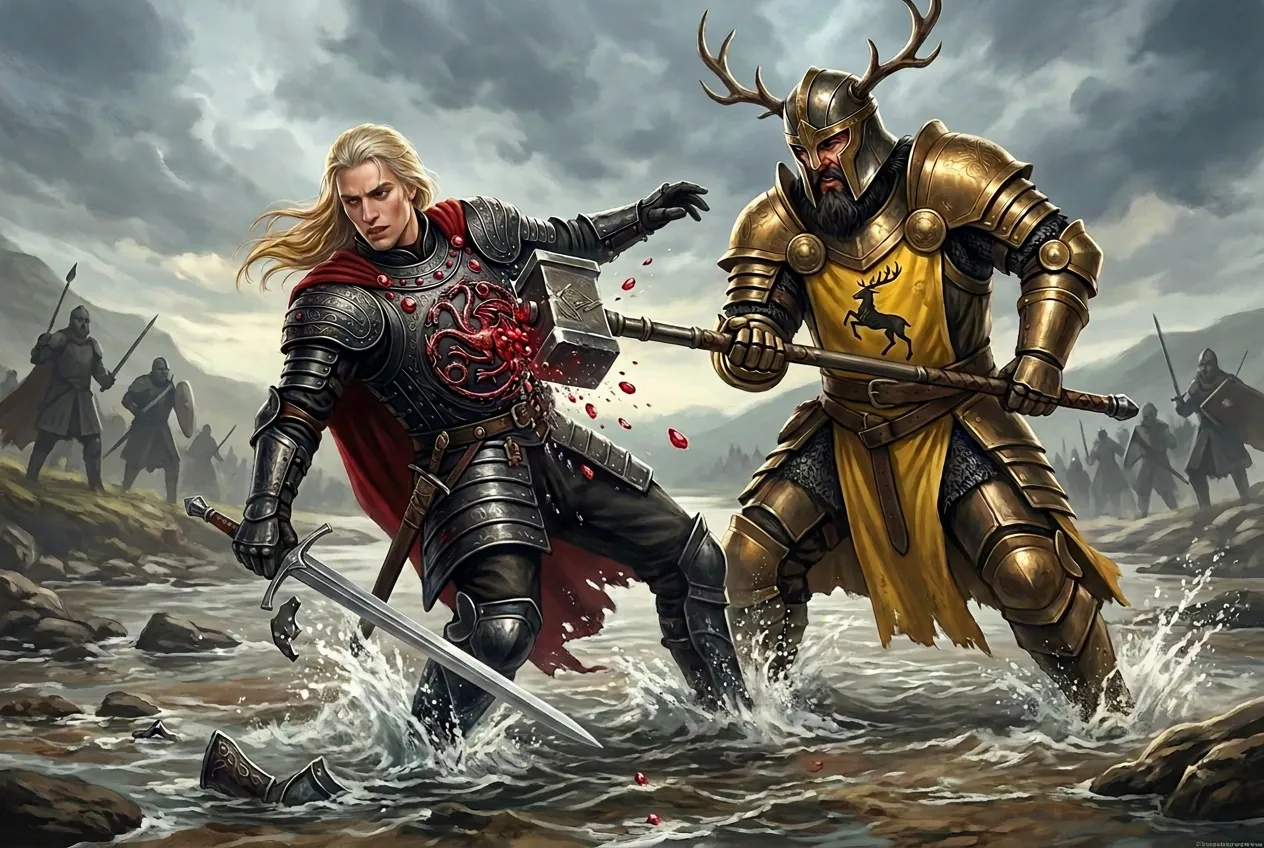
The full rebel host — stormlands, North, Vale, riverlands — met Rhaegar's forty thousand at a crossing of the Trident. The battle hung in the balance until the two causes met in their champions: Rhaegar Targaryen, resplendent in black plate with rubies across his breast, and Robert, already bleeding, swinging the hammer. In the churning water of the ford, Robert's blow stove in the dragon prince's chest, and the rubies burst free into the current — men would pan that stretch of river for years, and it is called the ruby ford to this day. The royal army shattered. Robert's own wound kept him from the pursuit, so it was Eddard Stark who raced ahead to King's Landing, arriving to find the Lannisters had sacked the city and a dead king at the foot of the Iron Throne.
Twohosts,andawarthatcamedowntoastretchofshallowwater.Two hosts, and a war that came down to a stretch of shallow water.
Herodeinblackplate,rubiessetacrosshisbreastintheshapeofathree-headeddragon.He rode in black plate, rubies set across his breast in the shape of a three-headed dragon.
Robertwasalreadybleeding.Hedidnotslowdown.Robert was already bleeding. He did not slow down.
Thehammercamedown.The hammer came down.
Thestonescamelooseandwentintothecurrent,andthecurrenttookthem.The stones came loose and went into the current, and the current took them.
TheycallittheRubyFordnow.Menarestilllooking.They call it the Ruby Ford now. Men are still looking.
As Robert told it
Everything I ever was came down to that ford. Forty thousand of them, and it hung in the balance until Rhaegar and I found each other in the water. Him in his black armour with those rubies across his chest, beautiful as a bloody song. Me, already bleeding, with the hammer. I put it through his breastplate and the rubies went into the river, and men pan for them there to this day. And do you know — I won the throne on that spot and I've hated him more every year since, because whatever he took from me, killing him didn't give it back. I killed him a thousand times in my dreams. It was never once enough.
Not one of Robert's fights, but essential to his story. While Robert campaigned, the Tyrell host besieged Storm's End for the better part of a year. Stannis held the walls through starvation — saved at the last by the smuggler Davos and a hull full of onions — until Eddard Stark arrived after the Trident and the Reach lords dipped their banners without a fight. Robert rewarded Stannis with Dragonstone rather than Storm's End, a slight (as Stannis saw it) that festered for the rest of both their lives.
As Robert told it
By the time Ned reached Storm's End my brother had eaten the rats and was eyeing the smugglers. Stannis held it for a year on spite alone — he'd have chewed the stones before he yielded my seat. He remembers I wasn't the one who lifted the siege, and he's right, and he'll die remembering it. I gave the smuggler who fed him a knighthood and took the tops off his fingers for the smuggling. Fair's fair.
Ninth year of Robert's reign · The Iron Islands
The Greyjoy Rebellion — the Siege of Pyke
Victory
When Balon Greyjoy crowned himself King of the Iron Islands and put the Lannister fleet to the torch, Robert got the one gift his reign ever gave him: a war. With Ned at his side again and Stannis smashing the Iron Fleet off Fair Isle, Robert stormed across the islands and personally led the assault through the breach at Pyke. Balon bent the knee; his last living son, Theon, went to Winterfell as Ned Stark's hostage and ward. Men who saw Robert during that campaign said the old Demon of the Trident had come back to life — briefly.
As Robert told it
Balon Greyjoy decided a crown looked good on him, so I put my whole realm on ships and went to explain otherwise. Best time I'd had in years, if I'm honest — it was the last time the hammer felt right in my hands. We stormed the bridge at Pyke, Thoros of Myr all aflame at the front, and I walked into Balon's own hall and made him kneel. Should have felt like a triumph. Mostly it felt like the end of something. After that it was all fish taxes and fat.
The Warrior's Way
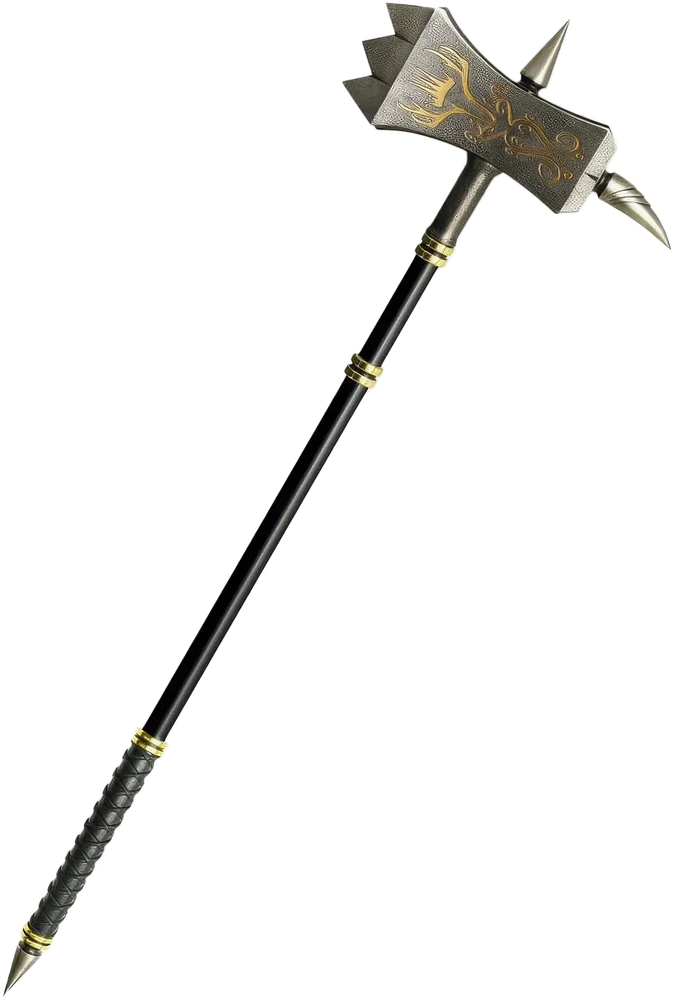
Robert fought with a spiked warhammer of enormous weight — Ned Stark privately doubted he could have lifted it himself — and preferred plate, a shield, and the front of the line to any command tent. He was that rarest kind of general whose personal legend was itself a strategic asset: men defected to him mid-war, and hosts wavered simply knowing he was across the field. His flaws as a king were the same qualities inverted; the appetite, impatience, and total commitment that made him unstoppable in war made him ungovernable in peace.